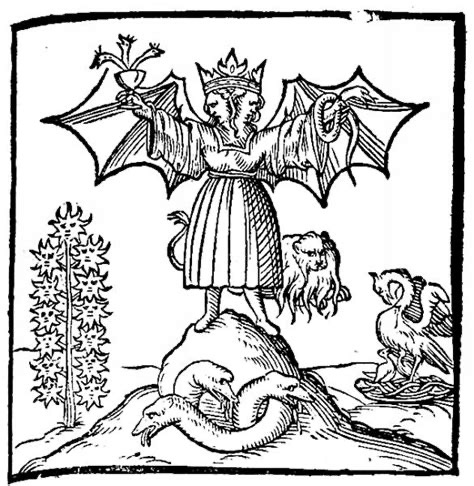
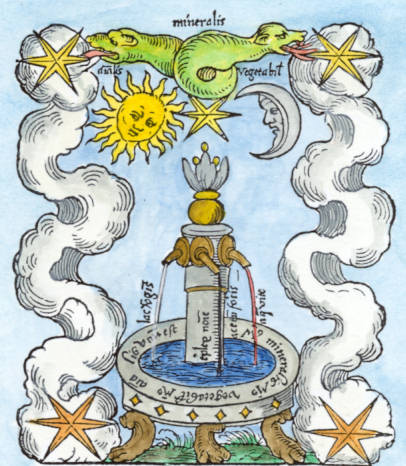
(Sensitivity Context: I, too, worry about the colors used in alchemy. They could possibly be taken in a racist context. However, while there is no denying racism in the Middle Ages, what research I’ve done really does point to chemistry, burning things down to the ash, and so on. So I’ll keep using the colors as useful, but let’s all agree that none of us want any connection to people in these terms.)
Stories, at their deepest level, are transformations. A character begins as one thing and becomes another. A world dissolves and is remade. A truth is lost, then rediscovered.
Long before modern narrative theory, alchemy offered a symbolic map for exactly this process.
Alchemy describes transformation through a sequence of colors. The simple version is black, white, yellow, red. (Yellow isn’t always included, but it’s relevant for our purposes and more frequently included the farther back you go.)
Carl Jung later recognized these stages not as primitive chemistry, but as a profound symbolic language for psychological transformation and individuation, the journey toward wholeness.
When we map these stages onto storytelling, alchemy becomes narrative structure.
1. Nigredo (Black): The Descent, Collapse, and Threshold Crossing
Color: Black
Keywords: Death, dissolution, shadow, chaos
In alchemy, nigredo is the stage where the substance is broken down, decomposed, and reduced to its raw essence.
In storytelling, this is the moment everything falls apart. The hero’s world collapses. Identity fractures. This is often where the threshold is crossed. The character leaves the ordinary world and enters the unknown. In Campbellian terms, the end of Act I.
Using a Jungian lens (which is useful because so much of storytelling is anchored to psychology), nigredo corresponds to the shadow entering: the repressed, denied aspects of the psyche are now part of the story.
2. Albedo (White): Purification, Insight, and Reorientation
Color: White
Keywords: Cleansing, clarity, reflection, awakening
After the darkness comes washing. In albedo, the material is separated into what is essential from what is not.
In narrative terms, this is the rebuilding phase. The character begins to understand what has happened. False beliefs are stripped away. New insight emerges but is still fragile. This is often the midpoint or inner turning point of a story.
With a Jungian lens, the albedo reflects the integration of unconscious material, especially encounters with anima/animus or inner opposites. The psyche begins to reorganize itself around a deeper truth. The character is no longer who they were, but neither are they who they will become.
3. Citrinitas (Yellow/Gold): Illumination and Emerging Self
Color: Yellow (sometimes golden or solar)
Keywords: Insight, awakening, dawn, integration-in-progress
Many simplified systems skip this stage—but historically, citrinitas represents the dawning of consciousness. In story terms, this is where the character begins to embody their transformation. Insight turns into action. A new identity starts to stabilize. It’s the difference between knowing and becoming. But it’s only beginning. The changes are somewhat understood, but aren’t fully integrated. The character has not yet become something truly new.
With the Jungian lens, you would say that this stage reflects the emergence of the Self, which is a deeper organizing principle beyond the ego.
In the story, you might have a “leveling up” montage here. Or you might have a series of wins where against tough odds, the character is really making some progress using the new things they have learned. This is the time of illumination. The caterpillar is emerging, but her wings are still wet.
Okay here’s where we have to pause for a minute to address…
THE END OF ACT II.
This is the dark night of the soul. The point where it looks like it’s all over. The part where the character symbolically (or sometimes literally) dies. If you stop here, the story really would be a tragedy.
If we look at alchemy and colors, the dark night of the soul corresponds to the crisis between citrinitas and rubedo, where emerging truth cannot yet sustain itself and forces a final transformation. All of the changing that the character has done is not enough. Whether you follow this pause with divine intervention or one last heroic try or whatever, the citrinitas in alchemy is only a partial transformation. It looks like a full transmutation of substance, and then it all goes wrong and falls apart. I think that’s helpful to keep in the back of your mind when writing a story. There comes a time when everything goes dark. I imagine the alchemist so excited by the emergence of (she thinks) gold and then putting her head in her hands in despair because the transformation goes wrong, and the whole experiment ends in toxic smoke or goo rather than gold or eternal life.
4. Rubedo (Red): Integration, Embodiment, and Return
Color: Red
Keywords: Completion, unity, incarnation, wholeness
Rubedo is the final stage. It’s the “reddening” and is associated with gold, blood, and the philosopher’s stone.
Of course this is the climax of the story. It’s where the character does not just understand change, they are changed.
The Jungian philosophy here is that rubedo represents individuation fulfilled, the integration of conscious and unconscious into a unified self. For Campbell, this is where the hero returns home with wisdom. In narrative story structure, the individual really does become a new person and crosses back into the world changed.
Denouement
One final thought on alchemy. One of the reasons why I think that alchemy works so well for storytelling is that it isn’t only about gold and eternal life (though they are certainly about that) but they’re also about purification of the soul. There is a ton of symbolism (some pretty funky) that uses symbols of natural elements and people in the process of change as a secret way of describing what was to become chemistry. So literal change and spiritual change get all mixed up together with symbols. Which makes it rich fodder for the imagination, the subconscious, psychology, and all the things that are the realms of story.
Consider keeping an eye on some of your stranger dreams. They might just include colors or at least transformations that remind you of alchemy. I would argue that is because alchemy captured some of the truth of human psychology and not the other way around.
 noellecarter