It seems like suddenly there is a small explosion of multicultural books, which is great. Ten or so years ago, most of the books I could find about cultural minorities tended to have themes of surviving in a world where they either didn’t fit in, or they though that they did until they realized that the deck was stacked against them because of something out of their control.
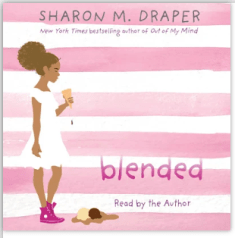
Blended, is a book that gets one step beyond that, which is at least progress–not for the book, but for the culture that the book is relevant for. As Isabella’s parents split up and find new identities, she is pulled in both directions even more than is typical for a kid who suddenly has a complex family, because her mom is white, and her dad is black. And Isabella didn’t know that she was…well, that her cultural identity…well, the question she asks in the book is “Who am I? And is it relevant to ask what am I?”
That’s a hard question for an eleven-year-old to suddenly be hit with. And the subplots of the story give her other cause to reflect and try to determine which “category” she fits into. I’ll avoid spoilers and just leave it at that while the book tackles this issue as carefully as an essay would, it does so through Isabella’s experiences and leads her to explore and define her own identity.
The part that I love about this message is the permission it give to a child to define yourself–but only after some experiences that anchor the reader to why it is difficult to come up with an answer.
As far as literature goes, it’s a good read, but not one that would stay with me or warrant re-readings as an adult. However, it’s a fun read for kids (and grownups who like kid books), and it is a very palatable way to explore some sensitive and confusing territory. Draper does a great job, to my mind, at walking the line between real treatment of issues and keeping it friendly for the 10-12 year-old range. That means that a child that is super-sensitive to cultural issues, especially those affecting African Americans, might find this a hard book, but I’m pretty wimpy, and I thought it was more fun than issue. I’d say it’s a solid read, and a good conversational springboard for kids who are dealing with this situation–or ones who would be enriched by building awareness.
 noellecarter